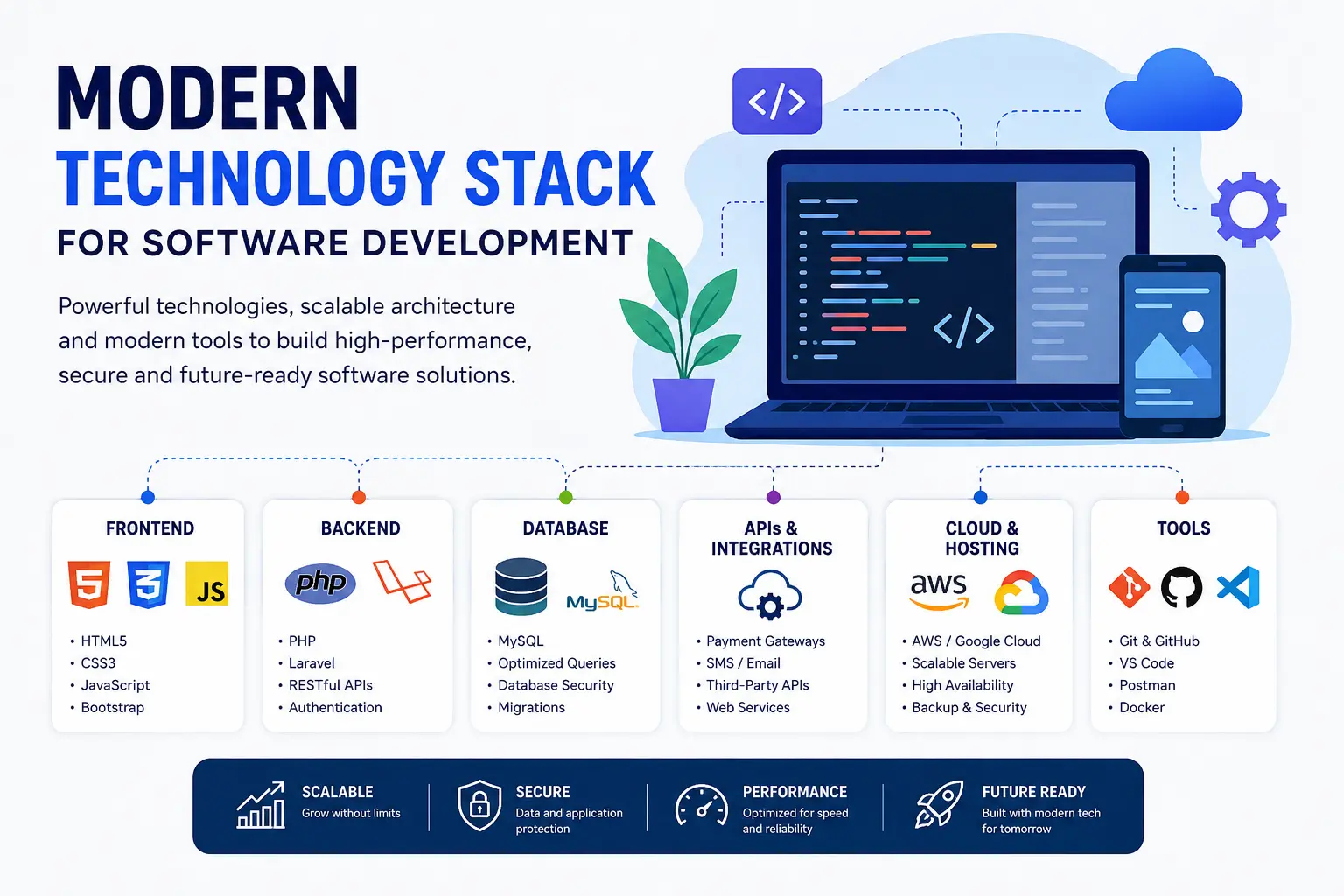
Modern Technology Stack for Software Development
Software development has become an important part of how modern businesses operate,communicate with customers,and manage their daily processes. From business websites and customer portals to mobile applications and custom management systems,the technology behind a digital product plays a major role in its performance and reliability. Choosing a modern technology stack for software development helps businesses create applications that are easier to manage,secure,scalable,and ready for future requirements.
A technology stack is not simply a list of programming languages or frameworks. It is a combination of frontend technologies,backend frameworks,databases,APIs,hosting infrastructure,and development tools that work together to deliver a complete software solution. Selecting the right combination requires an understanding of the project's functionality,target users,business goals,and expected growth.
What Is a Technology Stack?
A technology stack refers to the collection of technologies used to build and run a software application. Different components handle different responsibilities within the application. The frontend manages what users see and interact with,while the backend handles business logic,authentication,data processing,and communication with the database.
For example,a modern web application may use HTML,CSS,and JavaScript for the user interface,Laravel or another backend framework for server-side development,and MySQL for storing application data. APIs can then connect the application with payment gateways,SMS services,email platforms,and other external systems.
Frontend Technologies
The frontend is the visible part of a website or application. It directly affects how users experience a digital product. A modern frontend should be responsive,fast,easy to navigate,and compatible with different screen sizes.
HTML5,CSS3,JavaScript,Bootstrap,and other frontend technologies are commonly used to create responsive and interactive interfaces. For more complex applications,modern JavaScript frameworks and libraries can be used to manage dynamic content and advanced user interactions.
A properly planned frontend technology stack can improve usability and help businesses provide a consistent experience across desktops,tablets,and smartphones.
Backend Technologies for Software Development
The backend is responsible for the core functionality of an application. It processes requests,manages business rules,handles authentication,communicates with databases,and provides APIs for other applications.
Popular backend technologies include PHP,Laravel,Node.js,Python,Java,and several other server-side platforms. Laravel is a popular choice for PHP-based application development because it provides useful features for routing,authentication,validation,database interaction,queues,and API development.
The right backend technology depends on the type of application,the development team's expertise,the expected traffic,and the level of scalability required in the future.
Database Technologies
Most software applications need a reliable database to store customer information,transactions,products,orders,content,and other business data. Database selection should be based on the application's data structure,performance requirements,and future growth.
MySQL,MariaDB,PostgreSQL,MongoDB,and Microsoft SQL Server are examples of commonly used database technologies. Relational databases are suitable for applications that require structured information and relationships between records,while NoSQL databases can be useful for applications that require flexible data structures.
Importance of APIs and Integrations
Modern business applications often need to communicate with external services. Payment gateways,SMS providers,email services,maps,shipping platforms,CRM systems,and accounting software can all be connected through APIs.
A well-designed API allows different systems to exchange information securely and efficiently. Proper authentication,input validation,error handling,and access control are important when developing or integrating APIs.
Cloud and Hosting Infrastructure
The hosting environment is another important part of a modern technology stack. Depending on the project,applications can be hosted on shared hosting,VPS servers,dedicated servers,or cloud infrastructure.
Cloud-based infrastructure can provide flexible resources,scalability,monitoring,backup options,and improved availability. The hosting environment should be selected according to application traffic,storage requirements,security needs,and expected business growth.
Security in Modern Software Development
Application security should be considered throughout the development process. A secure technology stack helps protect user information,business data,authentication credentials,and financial transactions.
Developers should follow secure coding practices and implement appropriate authentication,authorization,data validation,encryption,and access control. Keeping frameworks,libraries,server software,and dependencies updated is also important for maintaining application security.
Performance and Scalability
A modern application needs to remain responsive as the number of users and amount of data increases. Performance should therefore be considered during the architecture and development stages rather than only after the application becomes slow.
Database optimization,caching,image optimization,efficient API requests,proper indexing,and server-side optimization can all contribute to better application performance. A scalable architecture also makes it easier to add new users,features,and services as the business grows.
How to Choose the Right Technology Stack
There is no single technology stack that is perfect for every project. The right choice depends on the application's purpose,business requirements,and future plans.
- Project Requirements: Understand the features,workflows,integrations,and technical requirements before selecting technologies.
- Scalability: Consider the expected number of users,transactions,and data growth.
- Development Expertise: Select technologies that the development team can work with efficiently.
- Security: Choose reliable technologies with strong security practices and regular updates.
- Performance: Consider how the technology will perform under real-world workloads.
- Maintenance: Select technologies that can be easily updated,maintained,and supported over time.
- Budget: Make sure the technology choices are practical for the project's development and maintenance budget.
Why Businesses Need a Modern Technology Stack
Businesses are increasingly dependent on digital systems to manage customers,employees,orders,payments,and internal operations. An outdated or poorly planned technology stack can make applications difficult to maintain and expensive to improve.
A modern technology stack provides a stronger foundation for developing new features,integrating third-party services,improving application performance,and supporting business expansion. It can also reduce unnecessary redevelopment when future requirements change.
Future-Ready Software Development
Future-ready software is not simply about using the newest programming language or framework. It is about creating an application architecture that can adapt to changing business requirements.
A carefully selected technology stack allows developers to improve existing features,add new functionality,connect new services,and scale infrastructure when required. This approach helps businesses build software that can continue to support their operations as they grow.
Conclusion
Choosing a modern technology stack for software development is an important decision that can influence an application's performance,security,scalability,and long-term maintenance. The best stack should match the project's actual requirements rather than being selected only because a particular technology is popular.
By combining suitable frontend and backend technologies with a reliable database, secure APIs, appropriate hosting, and a scalable architecture, businesses can create software solutions that are efficient, reliable, and prepared for future growth.
Latest Posts

How Smart Technology Is Transforming Modern Businesses
07 Sep 2026, 12:02 PM
Our Development Process
01 Aug 2026, 01:04 PM
More Than Just a Website Development Company
31 Jul 2026, 01:11 PM
Transform Your Business with Custom IT Solutions
23 Jul 2026, 01:43 PM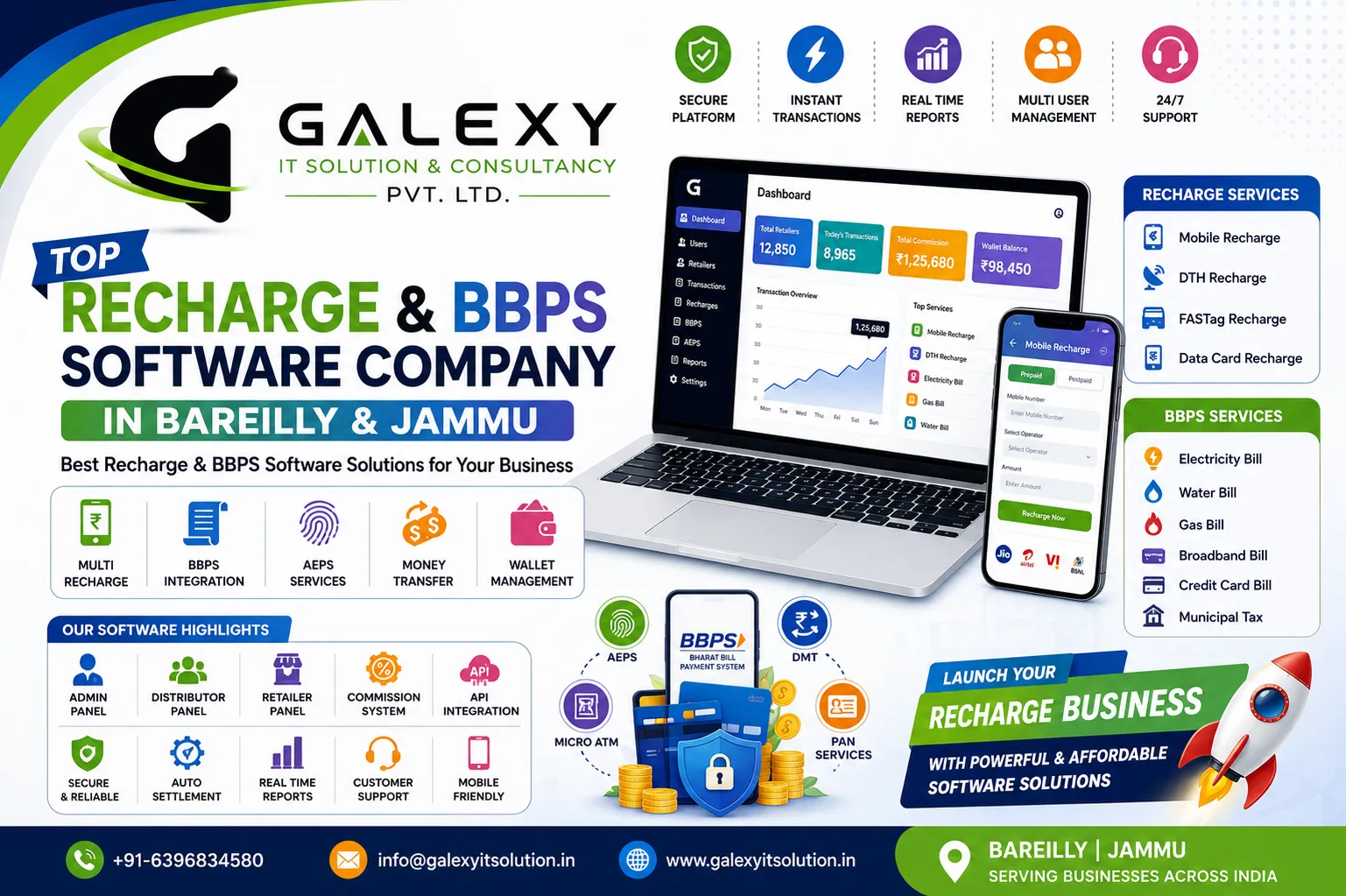
Top Recharge & BBPS Software Company in Bareilly & Jammu
16 Jul 2026, 12:14 PM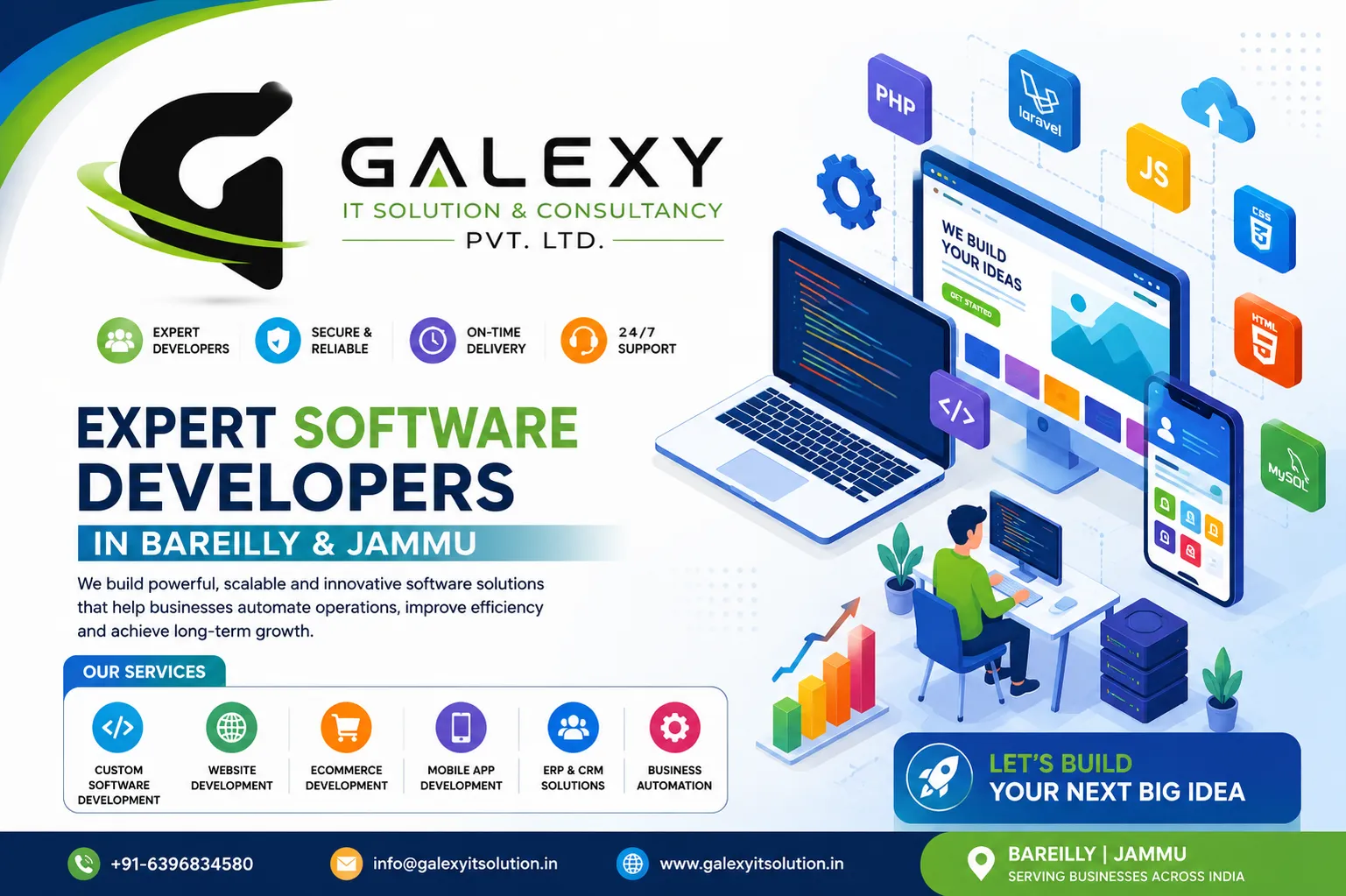
Expert Software Developers in Bareilly & Jammu
16 Jul 2026, 11:52 AM
Complete Jewellery Management System
15 Jul 2026, 05:21 AM
Local SEO Tips for Small Businesses
11 Jul 2026, 02:34 PM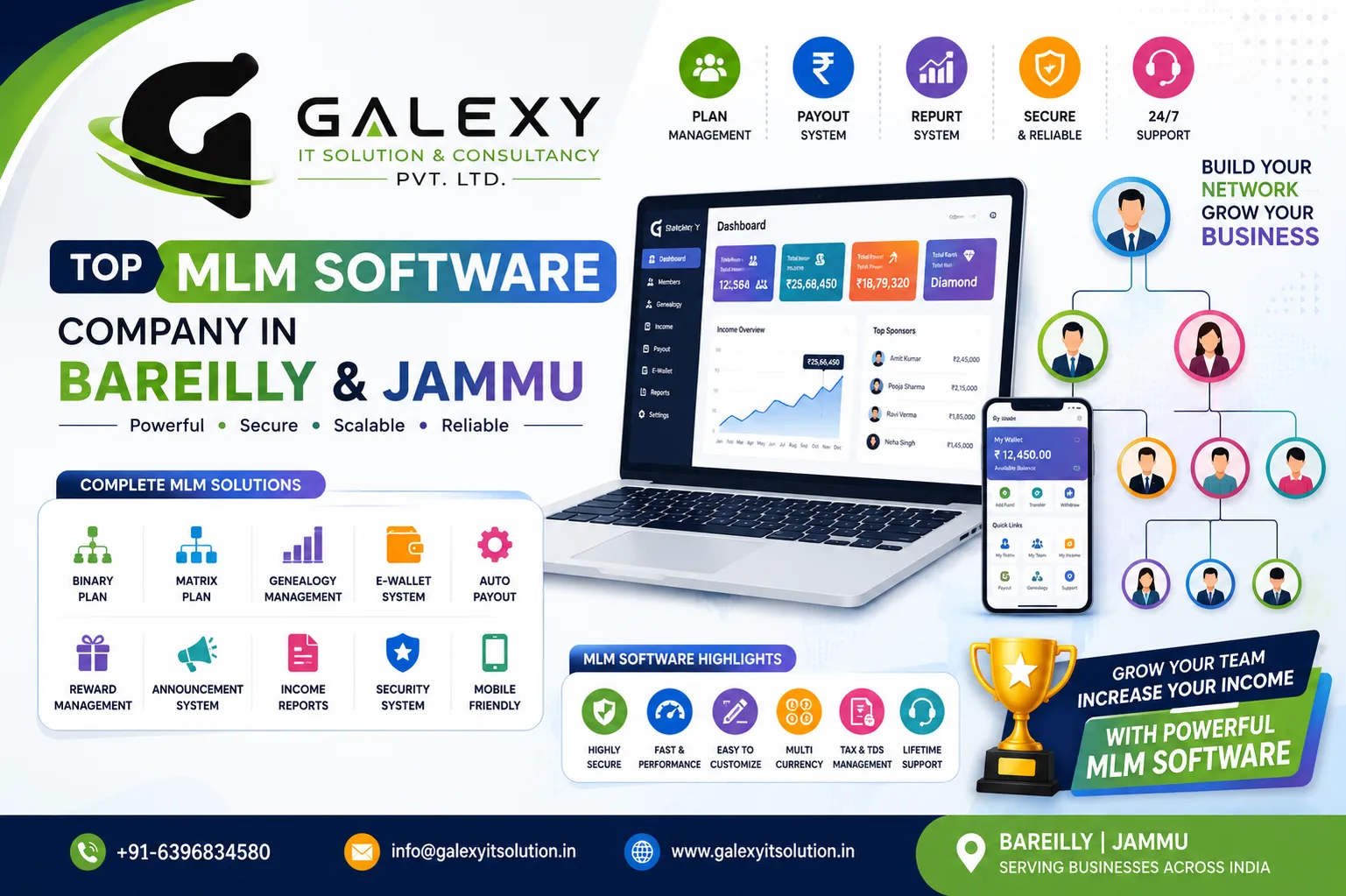
Top MLM Software Company Bareilly
16 Sep 2025, 07:36 PM
0 Comments